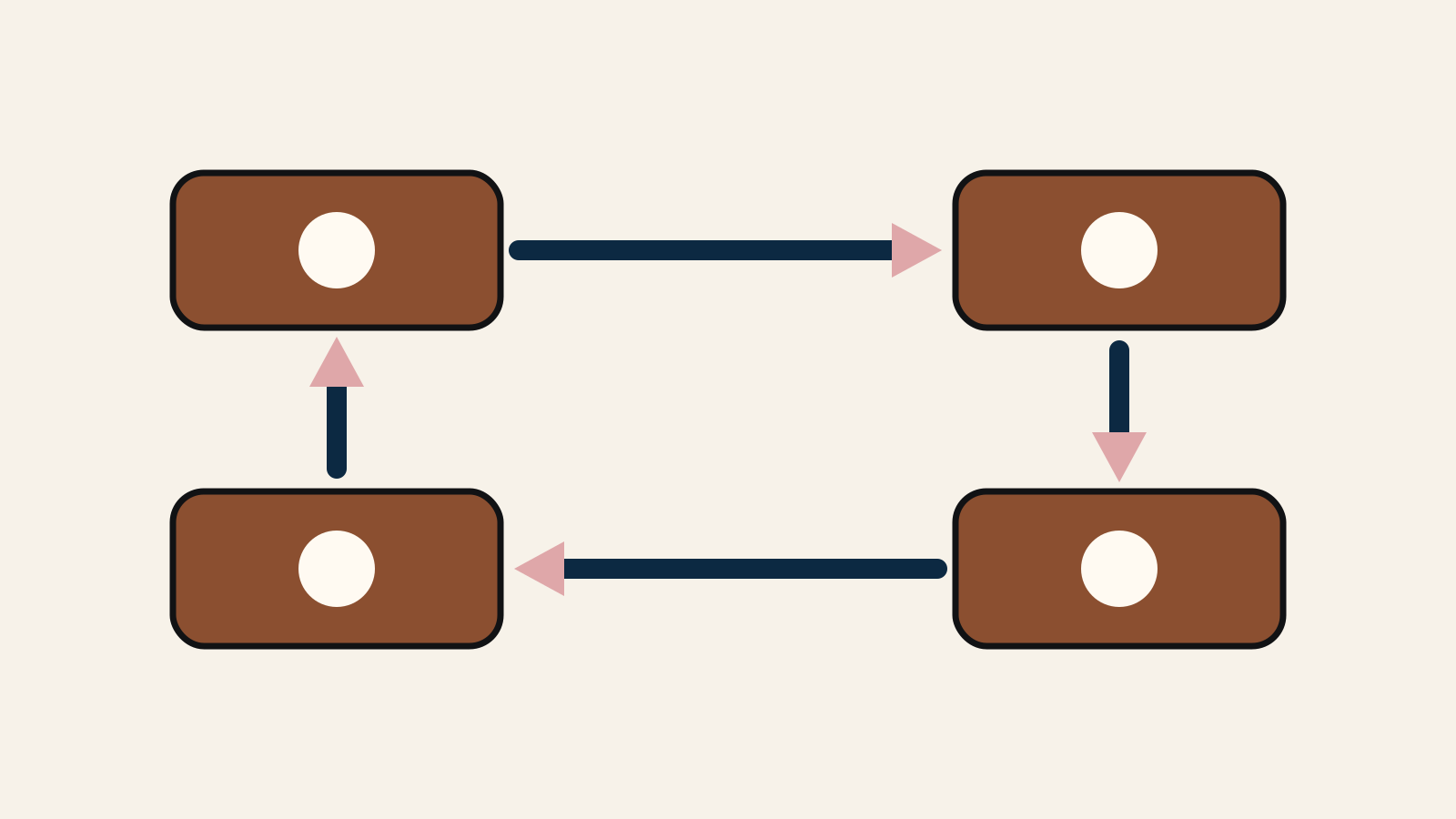
A revenue system gets fragile when every function optimizes for itself. Marketing celebrates leads. Sales complains about quality. Service inherits promises it never made. Back office reports the damage two weeks later. The fix is not another dashboard. It is one operating model.
Marketing: educate and qualify
Marketing: educate and qualify
Marketing should create demand and make the first filter. Its job is not to dump records into a CRM and declare victory.
Sales: set expectations and make agreements
Sales: set expectations and make agreements
Sales converts interest into a clear agreement. The promise must be specific enough that service knows exactly what has to happen next.
Service: manage expectations and meet agreements
Service: manage expectations and meet agreements
Delivery protects retention and reputation. Good service keeps the client informed while producing the result that sales sold.
Back office: analyze and optimize
Back office: analyze and optimize
Back office closes the loop. It tells the team what happened, where margin leaked, which channels converted, and what should change next.
The loop is the advantage
The loop is the advantage
The model gets stronger when each function feeds the next one. Better service creates proof. Proof improves marketing. Better qualification improves sales. Better data improves all of it.
Want to apply this?
Bring the real problem and the real numbers.
We can map the system, the economics behind it, and the next move that actually matters.
Book a Call
About the author
Scot Smith
Founder of Automated Inbound. Scot writes about demand, offers, booking systems, sales, and what the numbers say afterward.
About Scot →